Feel free to reach out:
hello@atomik.studio
October 28, 2026
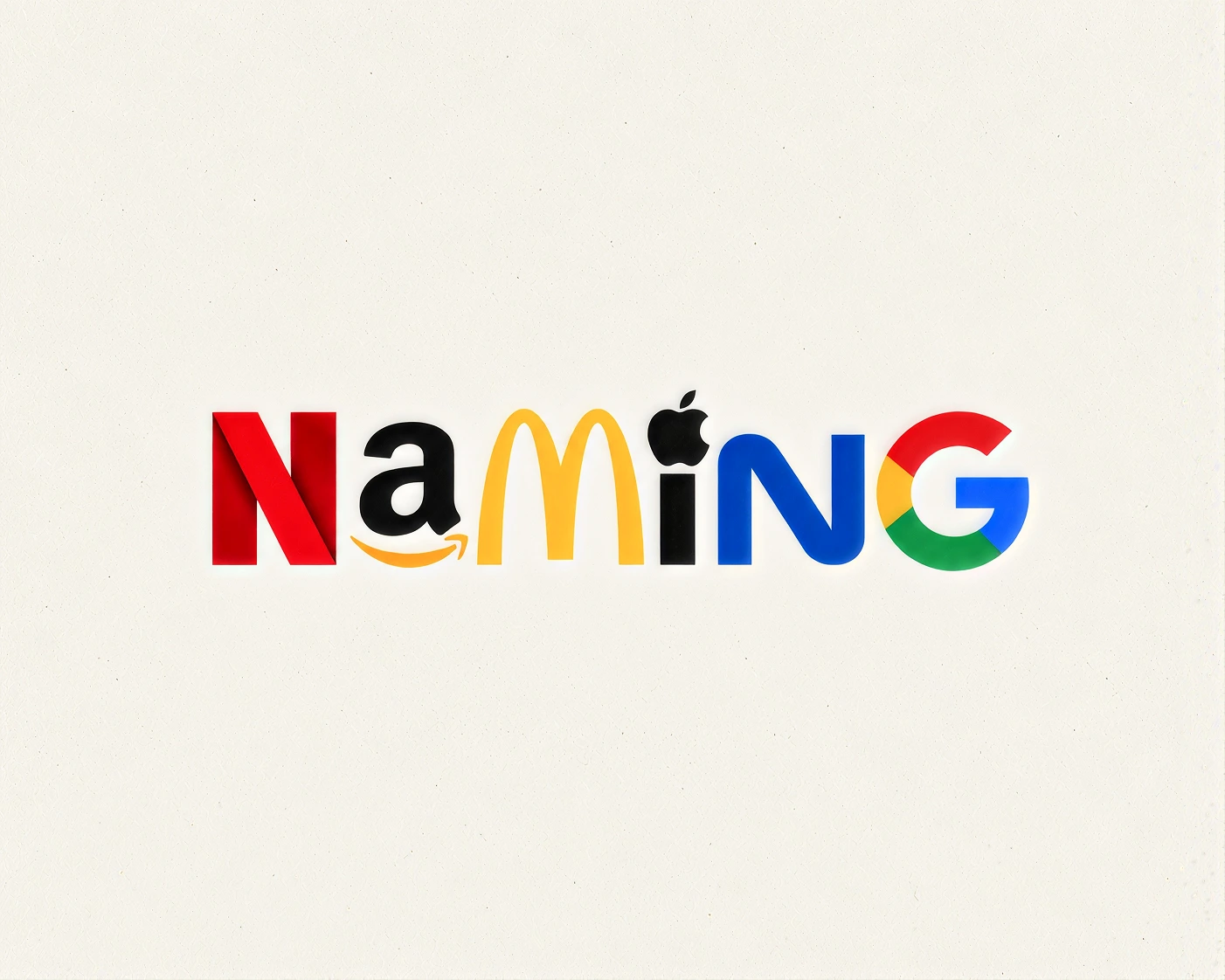
A practical guide to developing, evaluating and choosing a brand name, from the first ideas to the checks worth making before committing.
Naming a business sounds straightforward until someone asks you to do it.
You need something distinctive, easy to remember, relevant to the business and appropriate for the people you're trying to reach. Preferably short. Ideally available as a domain. Suitable for different markets. Easy to pronounce. And unlike anything competitors are using.
Then someone suggests a name everyone loves, only to discover another company registered it years ago.
Back to the drawing board.
Finding a good name requires more than creativity. It requires knowing what the name needs to accomplish, exploring possibilities and making sensible decisions about what survives.
More useful than asking whether everyone likes a name is assessing six qualities:
These work together. A memorable name with a serious trademark conflict isn't a good choice. Neither is an available name that customers constantly confuse with a competitor.
What are you naming: a company, a product, a service or a parent business? A standalone company may need considerable flexibility. A new product might benefit from a clear connection to its parent. The Brand Architecture Guide explains why these relationships matter.
Ask what the business offers today, how it could grow, who needs to use the name, which languages matter, what associations would help and where people will encounter it.
A fictional property technology company might start with maintenance requests but later add documents, communication and financial services. A name tied exclusively to repairs could become limiting.
Clarify the brand position before choosing words. The name doesn't need to express the entire proposition, but it should support it.
A name such as The Coffee House explains the category. That can be useful, but similar descriptions can be difficult to distinguish and protect.
These hint at an idea or benefit without describing it directly. Coppertone suggests tanning rather than simply saying sunscreen.
These use familiar words in an unrelated commercial category. Apple is the familiar technology example. Over time, the business creates the association.
Kodak and Xerox are examples of coined names. They can be distinctive, but an invented word isn't automatically memorable or easy to pronounce.
Names linked to people and places can communicate origin and continuity, while sometimes restricting the business's perceived scope.
The US Patent and Trademark Office and International Trademark Association explain how these categories relate to trademark protection. They're not a ranking of creative quality.
Generating hundreds of unrelated words is a reliable way to make naming a popularity contest. Establish conceptual territories first.
For a property ownership service, possible territories include connection (access and communication), clarity (confidence and understanding), continuity (long-term support) and place (home and belonging).
Within each, explore metaphors, cultural associations, etymology, word combinations and invented language. Don't judge every suggestion immediately. The territories provide a rationale beyond personal preference.
Names are frequently advised to have no more than two syllables. Short can be practical, but length isn't a guarantee of recognition.
Research published by Vrije Universiteit Brussel in 2026 suggests a more complicated relationship between length, recognition and brand attitude, including different effects for invented names.
A short name can still be confusing. A longer name might have a memorable rhythm. Say it, use it in a sentence and ask someone to repeat it. Return to it later. Does it stay with you?
Names look persuasive when perfectly typeset on a slide. People encounter them differently. They hear them unexpectedly, search after a recommendation, mistype them and read them quickly on an invoice.
Try a simple recall exercise. Show candidates in the same neutral format, with basic context about the offer. Later, ask which participants remember and what each suggests. Test pronunciation, spelling and how naturally the name works in conversation.
Don't run a popularity contest. Initial familiarity doesn't prove long-term potential. Apple's 2026 discussion of naming features and labels highlights the importance of naming to usability. A brand name can be evocative while a navigation label often needs to be immediately clear. Context matters.
A name that works in one language may have a different meaning or pronunciation elsewhere. Phonetic similarities also cause confusion, even when spelling differs.
Businesses operating in Dubai need to consider both English and Arabic uses, including transliteration, typography and how people actually speak the name. As explored in building brands for Dubai's audiences, cultural relevance isn't just translation.
Include fluent speakers and people familiar with relevant markets. Translation tools can help with initial checks but shouldn't replace cultural or linguistic review.
A name that works creatively may not be legally usable. Search for identical and confusingly similar names in relevant markets and categories, including alternative spellings and pronunciations.
A domain isn't a trademark. Registering a web address doesn't automatically establish rights to the name. And a clean result in one database doesn't establish worldwide availability.
The WIPO Global Brand Database supports preliminary searches; WIPO also recommends searching relevant national registers. For the UAE, consult official intellectual-property information and qualified legal advisers where appropriate.
Fifty suggestions make the exercise look productive but can make the decision worse. Select a handful of promising, preliminarily screened candidates and explain why each belongs.
Document the territory, intended associations, practical strengths, potential problems, pronunciation and clearance status. Present them consistently. If one name gets a beautiful logo and another appears as plain text, you're testing design presentation more than naming.
Score shortlisted names on a consistent 1–5 scale for relevance, distinctiveness, usability, flexibility and language suitability. Agree which criteria carry more weight before scoring.
A name targeting many language markets may need exceptional pronunciation flexibility. A specialist technical service may prioritise category relevance. An unacceptable trademark conflict isn't a low score to balance out elsewhere; it's a reason to reconsider the name.
Scores structure the conversation. They don't make the decision.
Clarify the offer, audience, markets, future ambitions and relationship to other brands.
Explore several distinct conceptual directions supported by the strategy.
Use linguistic associations, metaphor, cultural references and combinations. Allow room for exploration.
Remove weak choices, obvious conflicts and names that don't satisfy essential requirements.
Evaluate recall, pronunciation, spelling and the way names behave in realistic applications.
Complete preliminary screening and commission appropriate legal and linguistic checks.
Choose a viable name and document the approved spelling, pronunciation, language versions and usage principles.
Explaining everything: A name needn't list every service. Choosing by vote: Popularity isn't a strategy. Checking too late: A favourite name can become expensive to replace. Following trends: Fashionable suffixes and unusual spelling can make names interchangeable. Designing first: An attractive logo may disguise a weak word. Expecting instant attachment: Meaning is built through use.
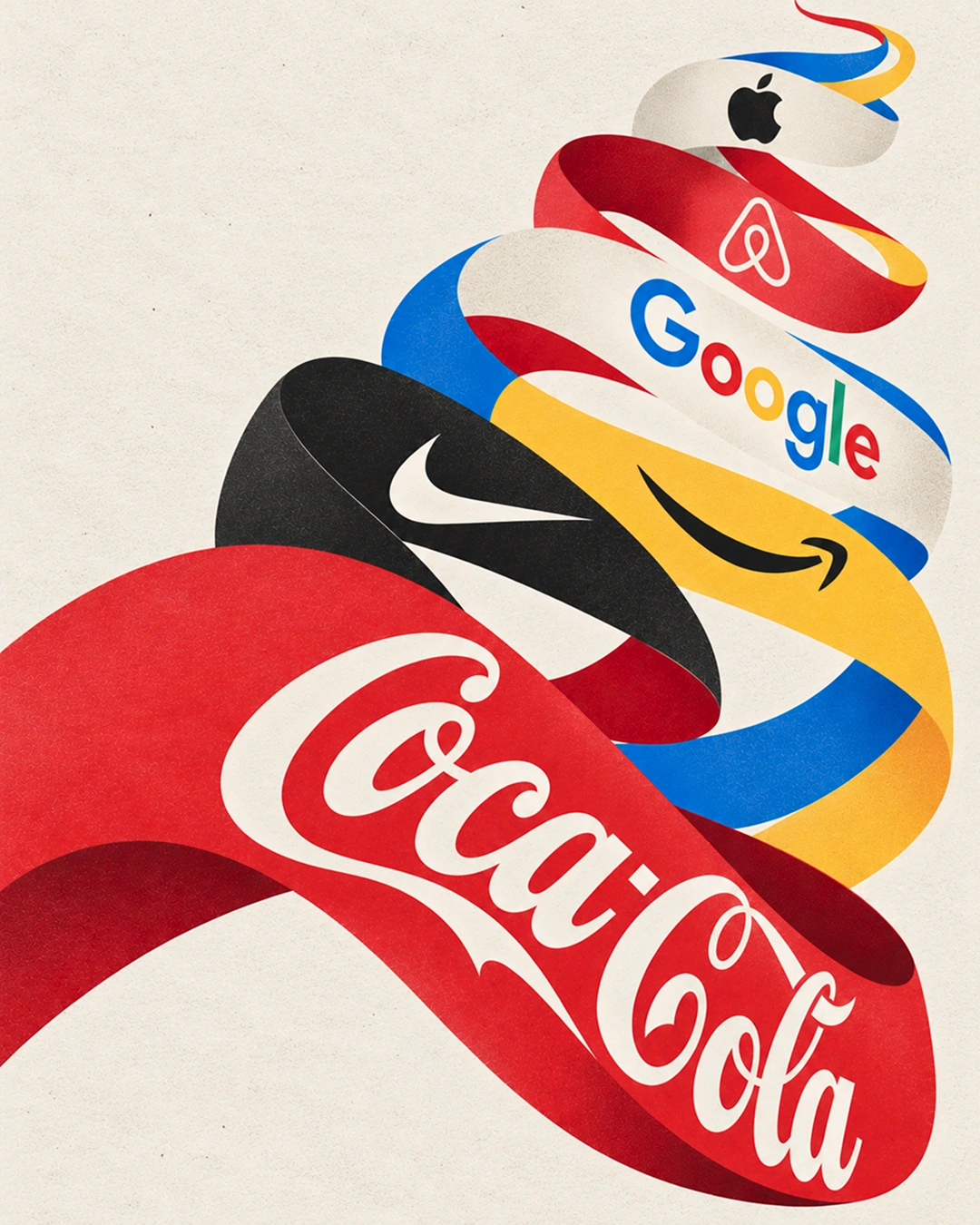
Familiar names haven't all followed the same formula. Some were unusual words; others were straightforward descriptions.
They built recognition through products, communication and experience. A name can carry more than a logo, but only when the business gives people something worth associating with it.
Find a name that's appropriate, distinctive and practical. Then build a recognisable identity around it and give people reasons to remember it.
How do you know if a brand name is good?
+A good name fits the business, is distinguishable from competitors and works in real situations. It should be easy enough to use and have no unacceptable legal conflicts.
Should a brand name explain what the business does?
+Not necessarily. Descriptive names can communicate a category quickly, while suggestive or abstract names create room for flexible associations. It depends on the business and audience.
How many brand names should you shortlist?
+There is no fixed number, but three to five well-developed candidates can be more useful than a long list. Each should meet agreed criteria and pass preliminary screening.
Does buying a domain mean you own the brand name?
+No. Domain registration and trademark rights are separate. Check relevant markets and categories, and obtain professional advice before investing significantly.

Francisco Belo dos Santos shapes brands through strategy, identity and digital experiences. Based in Dubai and born in Lisbon, he brings an international perspective shaped by diverse cultures and markets, combining strategic thinking with a belief in purposeful design.

Francisco Belo dos Santos shapes brands through strategy, identity and digital experiences. Based in Dubai and born in Lisbon, he brings an international perspective shaped by diverse cultures and markets, combining strategic thinking with a belief in purposeful design.
Clarify your challenge, set priorities and prepare a brief for your branding or design needs.
Enjoy a free, practical guide to help you define your challenge and prepare for your next branding or design project, complete with useful checklists.