Feel free to reach out:
hello@atomik.studio

October 25, 2026
A strong position connects what people value with what a business can credibly deliver.
Every business wants to stand out.
The usual response is to talk about differentiation. What makes us unique? How can we separate ourselves from competitors? What can we say that nobody else is saying?
Reasonable questions. But they can send a positioning exercise in the wrong direction.
Being different isn't particularly difficult. A hotel could replace every bed with a hammock. A bank could communicate exclusively through cartoons. Both would certainly stand out.
Whether anyone would find those differences valuable is another matter.
Good brand positioning isn't about being unusual. It's about understanding how people make choices, identifying where a business can create meaningful value and establishing a position it can credibly occupy.
The most useful discovery isn't what makes you different. It's what makes you relevant.
Brand positioning is the place a business or offer aims to occupy in people's minds relative to the alternatives available to them.
It helps answer a few questions. Who is this for? What need does it address? Why should someone consider it? And what makes it a credible choice?
Positioning is part of a wider brand strategy, but it has a particular responsibility: making the business understandable and relevant within a competitive context.
It isn't the tagline, although a tagline might communicate it. It isn't the visual identity, although design can make it recognisable. And it isn't simply claiming to be the best.
A company can describe itself as innovative, premium, customer-centric and forward-thinking. So can several thousand others.
Those descriptions might be sincere. They don't necessarily give customers a reason to choose one business over another.
A position becomes useful when it helps people understand why a particular offer makes sense for them.
One of the most useful ideas in positioning comes from April Dunford's approach to competitive alternatives: understanding what customers would do if your solution didn't exist.
Imagine a company developing a digital platform that helps property owners manage maintenance, documents and communication with their developer.
Its competitors might include other property-management platforms. But from the customer's perspective, the alternatives could be considerably less sophisticated.
Email. WhatsApp. A spreadsheet. Calling someone every time something goes wrong.
Or simply accepting that the process is frustrating.
Comparing the platform exclusively with other software products misses an important part of the picture. The customer isn't necessarily looking for better software. They might be looking for fewer things to chase.
Instead of another property-management platform with an impressive list of features, the proposition could become a simpler way to stay informed and get problems resolved.
The product hasn't changed. The context in which people understand its value has.
I find this a useful starting point because businesses often define competition through industry categories rather than through the decisions customers actually make.
Your competition isn't always the company that looks most like yours. Sometimes it's an established habit, an improvised solution or the decision to do nothing.
Customer research can tell us a great deal. But positioning requires more than collecting preferences.
People might say they want better service, lower prices, greater convenience or more personalised experiences.
Of course they do. Most people would happily accept all four.
The useful questions are more specific.
When does convenience matter more than price? What makes someone trust an unfamiliar provider? Which frustrations are serious enough to change their behaviour? What trade-offs are they willing to accept?
Two people with entirely different backgrounds can value the same thing for different reasons. Equally, people who appear similar on paper can have very different expectations.
That's why I'd avoid building a positioning exercise around excessively detailed customer profiles before understanding the behaviour and circumstances that influence choice.
IDEO's human-centred approach offers a useful principle here: observe people, explore their needs and test assumptions.
Interviews are valuable. So are customer complaints, reviews, sales conversations and observing how people use existing services.
The objective isn't to produce an impressive research document. It's to discover something that informs a better decision.
As I've explored in the danger of knowing your audience too well, research should help us understand people rather than reduce them to convenient assumptions.
Finding an unmet need is promising. Being able to address it is another matter.
A business might discover that customers want immediate, round-the-clock support. But if its operating model cannot sustain that commitment, building the brand around it creates expectations the organisation can't meet.
IDEO's framework of desirability, feasibility and viability offers a useful way to evaluate opportunities.
For positioning, I'd translate those principles into three questions.
Relevance: Does the position address something customers genuinely value?
Credibility: Can the business deliver through its capabilities, products, people and experiences?
Commercial sense: Does the position support a sustainable business model?
A fourth consideration connects them: recognition. Can people understand, remember and associate the proposition with the business?
A compelling promise that nobody needs is an expensive distraction. A desirable promise the business cannot deliver is a future disappointment. And a valuable offer nobody recognises may struggle to earn consideration.
Positioning lives somewhere between ambition and reality.
Differentiation concerns the reasons someone might consider one offer more suitable or valuable than another.
Distinctiveness concerns the ability to recognise and remember a brand.
They're related, but not interchangeable.
A business might offer essentially the same service as its competitors while developing a highly recognisable identity. Another might deliver something genuinely different but communicate it through an identity that disappears into its category.
Research challenged the assumption that consumers must perceive meaningful differences between competing brands for those brands to succeed. Their work places greater emphasis on building distinctive associations that make a brand identifiable.
It's a useful counterbalance to the idea that every business must discover a completely unique functional benefit.
Sometimes meaningful differences exist in the product or service. Sometimes the advantage comes from accessibility, convenience, reliability or how the experience is delivered.
And sometimes the challenge is helping people notice and remember an otherwise competitive offer.
I wouldn't treat differentiation and distinctiveness as competing philosophies.
Give people a reason to choose you when that difference matters. Make it easy for them to recognise you when the opportunity arises.
A strong brand identity can support recognition, but it shouldn't be expected to compensate for fundamental weaknesses in the offer.
As I discuss in what happens when you take the logo away, recognisability extends well beyond a single symbol.
One of the less comfortable parts of positioning is accepting that a business cannot prioritise everything.
A consultancy wants to be highly specialised but equally attractive to every industry. A retailer wants to be premium and affordable. A hospitality business promises exclusivity, accessibility, intimacy and scale.
Some of these qualities can coexist. Others require trade-offs.
Positioning requires deciding what to lead with.
That doesn't mean rejecting everyone outside a narrowly defined audience. It means establishing a clear perspective that makes the offer easier to understand.
Consider two fictional professional-services firms.
The first promises comprehensive solutions, outstanding quality, innovation and exceptional customer service.
The second specialises in helping growing companies simplify complicated operations before investing in new technology.
The first might be capable of considerably more. But the second communicates a clearer situation in which someone might need its expertise.
It gives the customer context.
This connects to the work of Siegel+Gale on brand simplicity. The objective isn't to remove complexity from the business, but to make the experience of understanding and choosing it simpler.
A useful position makes the offer clear without requiring customers to understand everything behind it.
Positioning rarely improves when the first promising direction becomes the only direction.
I prefer developing several credible alternatives before deciding which deserves further attention.
A business might explore positioning around specialist expertise, convenience, accessibility, a particular customer need or a different approach to service.
Each direction changes what the organisation emphasises and how people are likely to understand it.
Rather than debate abstract statements indefinitely, make the possibilities tangible.
Write alternative homepage introductions. Develop different explanations of the offer. Create simple landing pages. Show how each position would influence a sales conversation.
Then test them.
Can people explain the offer in their own words? Do they understand when it would be useful? Does it create a reason to consider the business? Does the promise feel credible?
The level of research should reflect the consequences of the decision. A company entering a new market may need extensive investigation. A smaller business refining its proposition might learn a great deal from a handful of relevant conversations.
Testing should inform decisions, not replace them.
A positioning statement can sound convincing in a workshop and considerably less convincing when applied to something real.
And as I've argued in consensus is not a creative strategy, agreement alone isn't evidence that a decision is right.
A positioning exercise often ends with a presentation.
There's a market overview, a competitive map, several strategic territories and, eventually, a statement everyone approves.
Then the organisation continues operating exactly as before.
The problem isn't necessarily the research or the presentation. It's the failure to translate the decision into action.
If a company positions itself around simplicity, that should influence how services are structured, information is presented and customers receive support.
If it promises specialist expertise, that expertise should be visible through its work, communication and customer interactions.
Interbrand's brand strength framework reinforces the importance of organisational alignment alongside external brand recognition and relevance.
Positioning cannot remain the responsibility of marketing alone when its promise depends on decisions made across the organisation.
This is why brand experience matters. Every meaningful interaction either supports the position or introduces reasons to question it.
A position only becomes convincing when the business behaves accordingly.
A useful framework shouldn't require an elaborate workshop.
Start by answering five questions.
1. What's the situation?
When would someone need what you offer? What problem, ambition or circumstance creates the opportunity?
2. What are the alternatives?
What would people realistically do without you? Include competitors, substitute solutions, established habits and doing nothing.
3. What's the value?
What can you provide that makes a meaningful difference? Focus on outcomes rather than listing every capability.
4. What's the evidence?
What gives people a reason to believe you? Consider expertise, product characteristics, customer experiences, processes and actual results.
5. What's the choice?
Which part of that value will you prioritise, and what will you deliberately avoid trying to own?
From there, try expressing the proposition in a single working sentence:
For people facing [situation], [brand] offers [value], through [approach or capability], giving them a reason to choose it over [alternatives].
This is a way of checking whether the thinking holds together.
If the sentence relies on words such as innovative, exceptional or world-class, try replacing them with something observable.
If it could belong to every competitor, examine what you're actually prioritising.
If nobody inside the organisation agrees on what can credibly be delivered, the exercise has uncovered a problem.
That's progress too.
The strongest positioning work doesn't necessarily produce the cleverest statement.
It creates clarity about where a business can contribute, which customers it can serve well and why someone should choose it.
It gives teams a basis for making decisions and designers something meaningful to express.
But positions aren't permanent. Markets evolve, customer needs change and businesses develop new capabilities.
The challenge is knowing when the position itself needs reconsidering and when it simply needs to be communicated or delivered more effectively.
A brand audit can help distinguish between the two.
Because a position isn't something a business owns simply by declaring it.
It's something people gradually come to associate with the business, provided it keeps giving them a reason to.

Francisco Belo dos Santos shapes brands through strategy, identity and digital experiences. Based in Dubai and born in Lisbon, he brings an international perspective shaped by diverse cultures and markets, combining strategic thinking with a belief in purposeful design.

Francisco Belo dos Santos shapes brands through strategy, identity and digital experiences. Based in Dubai and born in Lisbon, he brings an international perspective shaped by diverse cultures and markets, combining strategic thinking with a belief in purposeful design.
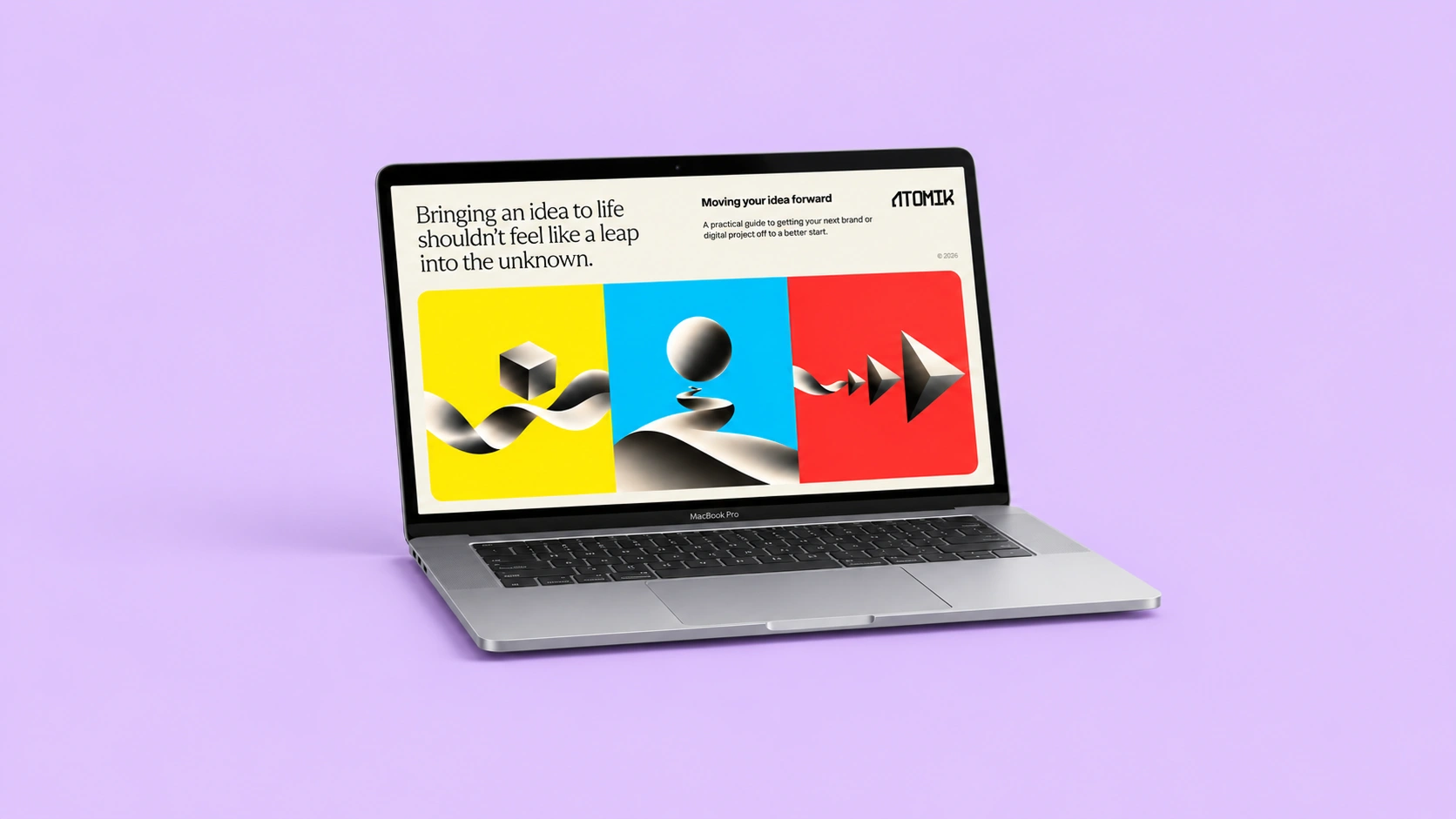
Clarify your challenge, set priorities and prepare a brief for your branding or design needs.
Enjoy a free, practical guide to help you define your challenge and prepare for your next branding or design project, complete with useful checklists.