Feel free to reach out:
hello@atomik.studio

October 23, 2026
Before replacing the identity, changing the message or commissioning another website, understand what's working, what's not and why.
Nobody commissions a brand audit because everything is going wonderfully.
Perhaps enquiries have slowed. The website describes a company that barely exists anymore. Competitors seem to have found their voice, while three departments have three different explanations of what your business does.
Naturally, somebody suggests a new logo. Or a new website. Ideally both, with a launch date already in the calendar.
Maybe they're right. But making a problem look better is not the same as solving it.
A brand audit is a way to find out what's actually going on before spending money changing things. Just as importantly, it helps you recognise what you shouldn't touch.
A brand audit is a structured review of how a business intends to be understood, how it actually presents itself and what people experience and believe about it.
That can involve strategy, audience, competitors, identity, communications and customer experience. The point isn't to inspect everything. It's to inspect what matters.
A confusing service proposition doesn't automatically require six months of workshops. Equally, a large business considering a new position probably needs more than a competitive mood board.
The value is in collecting enough evidence to make the next decision with some confidence. Not in proving how thorough the research team can be.
And sometimes the conclusion is that the brand is fine. Not every audit has to end with a rebrand proposal.
Before collecting screenshots or interviewing customers, decide why the audit is happening.
Are enquiries coming from the wrong audience? Is a growing collection of services becoming difficult to explain? Is the brand losing relevance in its category? Has a merger left several identities competing for attention? Are customers experiencing something different from what the business promises?
Each question suggests a different kind of investigation.
If people don't trust the business, a new colour palette is unlikely to win them over. If they love the product but can't recognise the brand, looking at its identity makes considerably more sense.
I prefer to start by understanding what the business is struggling to decide. It helps separate the questions worth asking from the distractions. Once we know what decisions the audit needs to support, we can work out what evidence actually matters.
This is also a useful way to approach investing in branding: start by understanding what needs fixing rather than assuming the answer is already on the brief.
Before opening Figma, find out what the business actually does.
Understand the offering, how the company makes money, which customers matter, where growth is expected and what the team believes gives it an advantage.
Speak to people beyond leadership and marketing. Sales can explain recurring objections. Customer service knows where promises fall apart. Product and operations often understand constraints that never appear in a brand presentation.
One exercise I find useful is asking people across the business to explain what it does in their own words. Where do the answers converge? Where do they contradict one another? Those differences can reveal a lack of clarity long before you reach the design.
Not every disagreement reveals a strategic crisis. Some businesses genuinely are complicated. The challenge is separating necessary complexity from confusion the brand has created for itself.
A meeting room full of confident opinions isn't customer research.
Talk to current customers, prospective customers and, when possible, people who chose an alternative. What do they think the business does? What do they value? What makes them hesitate? Which companies do they compare it with?
Look at support conversations, reviews, lost opportunities, recurring search queries and the questions people ask before buying.
One particularly angry review is not a market trend. And a survey score might tell you there's a problem without telling you what it is.
I pay particular attention when research challenges something everyone assumed was obvious. Those moments are often more useful than confirmation. Look for patterns across conversations and behaviour. Be clear about what you've learned and what remains an assumption.
Research matters, but it can also become a way of repeating familiar expectations. The goal isn't simply to give people what they already know. It's to understand their choices well enough to question them. That tension is worth considering when audience research starts shaping every creative decision.
Every market has its conventions. Some help customers understand what a business offers. Others make different brands look and sound surprisingly similar.
Review direct competitors, but also the other ways a customer might solve the same problem. Compare promises, prices, service experiences, language, visual cues and what each brand seems to emphasise.
A wall of competitor logos looks impressive in a workshop. It tells you surprisingly little about why anyone buys from them. Look at websites, messaging, products, sales materials and experiences instead.
Ask which claims everyone makes, which qualities customers can genuinely distinguish and where the category may be taking something for granted.
In Dubai, repeated visual signals of premium positioning can create identities that are polished but difficult to tell apart. That doesn't necessarily mean the right answer is to become louder. It may mean finding a more relevant reason to be recognised.
The aim is to understand where the business could go, not to develop a slightly different version of whoever seems to be winning.
Only now would I start looking closely at the identity. I prefer seeing it in ordinary materials, not only the examples prepared for a presentation.
Collect examples from the real world: website pages, social content, proposals, packaging, presentations, signage, emails and whatever else the organisation actually produces.
Does the identity remain recognisable without the logo? Do typography, colour, imagery, layout and language work together? Can the system handle everyday content, small screens and different languages? Are there useful guidelines and accessible files?
If the work is inconsistent, find out why. Perhaps the system is too rigid. Perhaps the guidance is vague. Or perhaps the correct logo is buried in a folder named FINAL_v7.
Dated doesn't always mean ineffective. Equally, a beautiful new identity can be perfectly forgettable. Recognition is worth more than being fashionable for a season.
Before replacing assets that people already recognise, ask what remains distinctive when the logo is removed.
Where implementation is the issue, better guidelines and usable brand systems may achieve more than designing another identity.
A business may promise clarity while its purchase process is confusing. It may talk about personal service and leave enquiries unanswered. It may appear approachable in advertising and feel unhelpful once someone becomes a customer.
Follow what happens between the promise and the reality.
Follow a realistic customer journey from discovery to enquiry, purchase, delivery and support. Look at how information is presented, where decisions become difficult and how different teams contribute to the experience.
Some problems need design. Others need better processes, clearer information or a better product. No amount of thoughtful tone of voice will make a broken service feel thoughtful.
That's why it's useful to examine the relationship between the promise and the experience people actually have. The gap often reveals more than a review of the advertising.
Sometimes what appears to be a communication problem is really a business problem. A more convincing brand cannot hide an experience that fails to deliver for very long.
It's remarkably easy to turn assumptions into attractive slides. They remain assumptions.
Try distinguishing between what you know, what you've observed and what you're inferring.
Three customers struggling to find a price is an observation. Concluding that the entire audience finds the business opaque is an interpretation that may need more evidence.
Likewise, an internal team describing a brand as inconsistent doesn't necessarily mean customers see it that way. They may recognise the brand perfectly well despite a few untidy applications.
Record the source, recency and limitations of the evidence. Where possible, compare internal beliefs with customer behaviour and perception.
Not every observation needs a score out of five. Adding a number doesn't turn an opinion into a fact.
For me, evidence should inform judgement, not replace it. At least it gives everyone something more useful to discuss than personal taste.
Finding things to criticise is easy. Deciding which ones are worth the business's time and money is the job.
I would rather leave an audit with a handful of decisions people can act on than a catalogue of everything that could be improved. Bring the findings together around a few questions. What is working? What isn't? What is causing the problem? What should be protected? What would make the greatest difference if improved?
Then separate the recommendations into practical categories.
Keep. Assets, associations or experiences that already create value and recognition.
Improve. Messaging, templates, digital experiences or processes that can work better without changing the brand's direction.
Reconsider. Positioning, audience choices or promises that no longer match the business and market.
Stop. Activity that creates confusion, adds complexity or consumes effort without contributing to the intended outcome.
Not every finding deserves a project. Fixing one frustrating step in the customer journey may do more than updating fifty beautifully branded documents.
Some findings justify a larger change. If they do, the rebranding process should build on the evidence rather than start again from personal preference.
An impressive report that changes nothing is still just an impressive report.
Give each recommendation an owner, a level of priority and a clear reason. Identify what can be addressed immediately, what needs further investigation and what depends on other business decisions.
If a website needs improvement, determine whether the issue is content, usability, technology, visibility or an unclear value proposition. If an identity is hard to manage, decide whether the answer is new assets or a more effective handover.
Define how progress will be assessed. That could mean clearer customer understanding, more qualified enquiries, better internal adoption or fewer points of friction in the customer journey.
A transformation programme isn't automatically more valuable than three sensible improvements delivered properly.
An audit makes sense when there's an important decision to make: entering a market, merging businesses, rebuilding a website or considering a rebrand.
It can also help when the business has grown faster than its identity, when internal teams disagree on what the brand stands for or when customer perceptions seem out of step with the organisation's ambitions.
But an audit doesn't need to wait for a crisis. A lighter review of key touchpoints and customer feedback can identify small problems before they become expensive ones.
Let the decision determine the scope. Not the number of workshops in the proposal.
Before turning observations into recommendations, ask whether you've answered the following:
If the audit produces more questions than answers, that isn't necessarily a failure. It may have identified the assumptions the business most needs to test.
A brand audit isn't an elaborate way of justifying a redesign you've already decided to do.
It should help the business see where it stands: what people value, where expectations and reality have drifted apart and what could genuinely make a difference.
That might mean a rebrand. Or clearer messaging, better guidelines, a less frustrating experience. It might even mean leaving the identity alone. Imagine that.
Find what's working. Understand what isn't. And don't redesign something just because you can.

Francisco Belo dos Santos shapes brands through strategy, identity and digital experiences. Based in Dubai and born in Lisbon, he brings an international perspective shaped by diverse cultures and markets, combining strategic thinking with a belief in purposeful design.

Francisco Belo dos Santos shapes brands through strategy, identity and digital experiences. Based in Dubai and born in Lisbon, he brings an international perspective shaped by diverse cultures and markets, combining strategic thinking with a belief in purposeful design.
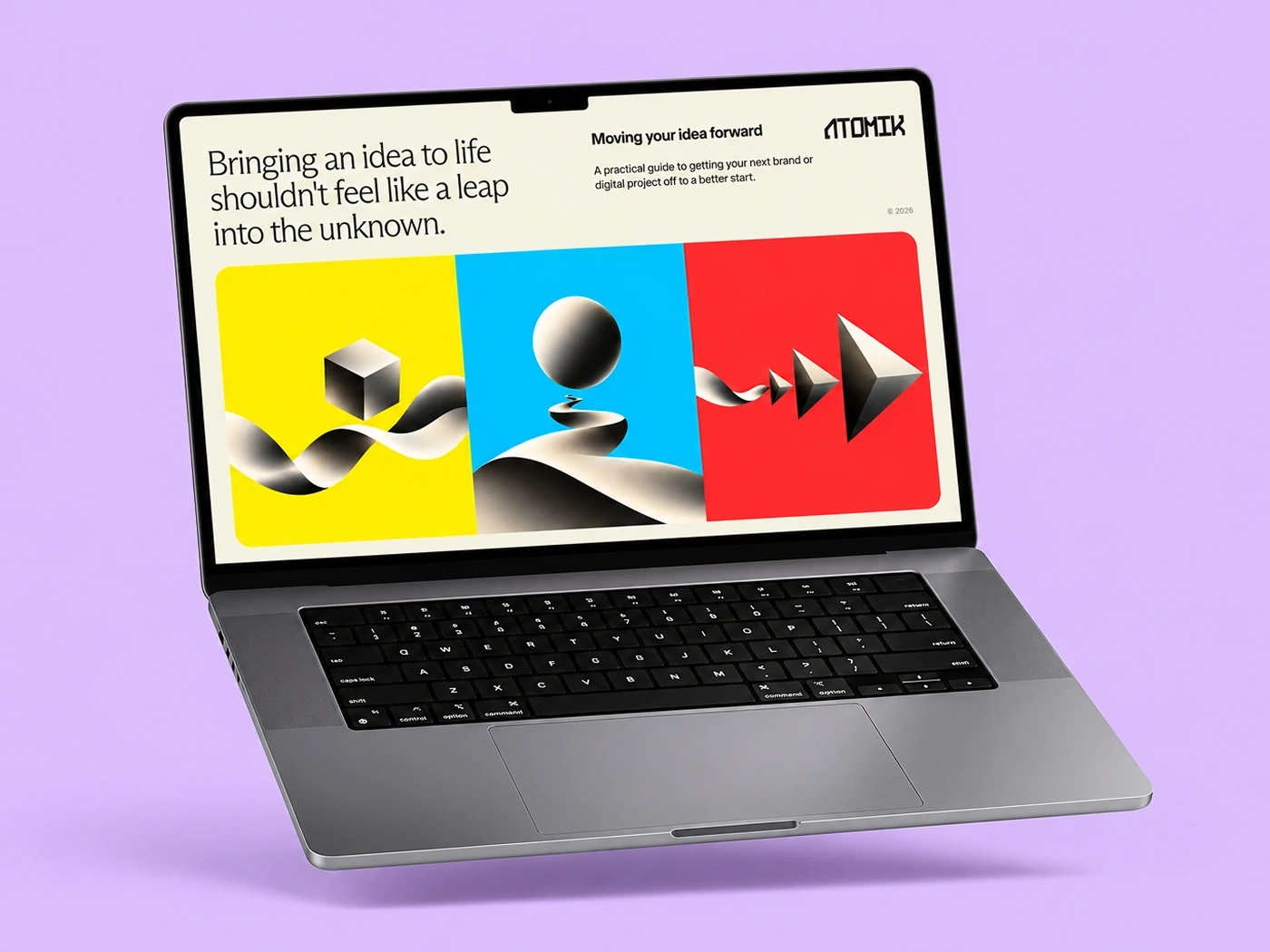
Enjoy a free, practical guide to help you define your challenge and prepare for your next branding or design project, complete with useful checklists.