Feel free to reach out:
hello@atomik.studio
November 8, 2026
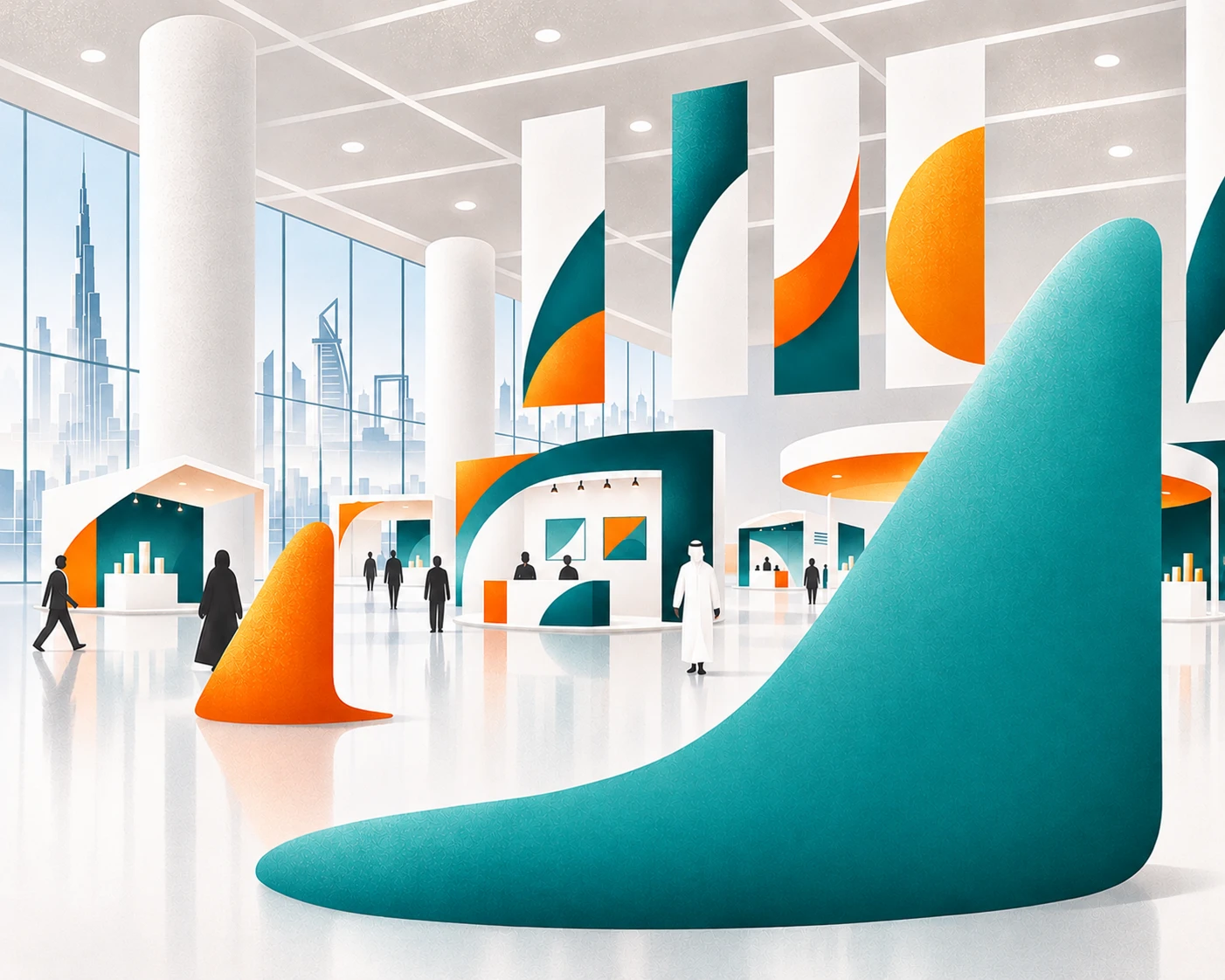
Dubai has no shortage of pop-ups, temporary installations and branded experiences. What makes people visit, participate and remember them?
Dubai has become very good at creating reasons for people to go somewhere.
A restaurant opens for a limited season. A brand takes over a corner of a shopping mall. A temporary installation appears in a public space. A weekend market brings together independent businesses, food concepts and designers.
Some of these spaces attract queues, photographs and considerable attention. Others disappear almost as quickly as they arrived.
The difference isn't always the budget or the size of the installation.
A permanent shop has certain advantages. People may pass it regularly, recognise its location or return because it's convenient.
A pop-up has less time to establish those habits.
It needs to give people a reason to make the journey, particularly in a city where travelling between destinations can involve a deliberate decision.
That reason might be access to something unavailable elsewhere, a chance to participate, a limited product or an experience that introduces a brand in a different way.
Scarcity can create urgency, but it doesn't automatically create value. A temporary space that offers little beyond the opportunity to photograph its entrance may attract attention without giving people much reason to engage.
The strongest experiences make the visit worthwhile in its own right.
The city's calendar creates regular opportunities for businesses to experiment with physical experiences.
Market Outside The Box, part of Dubai's retail events programme, brings together emerging retail concepts, food vendors and entertainment in a temporary setting. It gives smaller businesses a place to meet audiences without necessarily committing to a permanent storefront.
Dubai Design District offers another setting where commercial brands, independent designers and creative businesses share space during exhibitions, launches and events.
At Dubai Design Week, the November 2026 programme combines installations, workshops, exhibitions and a curated Marketplace featuring regional artisans and small businesses.
These formats offer different opportunities. Some are primarily about selling. Others encourage exploration, conversation or participation.
A business can use a temporary space to introduce an unfamiliar product, observe how people respond or test an experience before investing in something permanent.
That makes the space useful for more than publicity.
There is a considerable difference between looking at a brand and doing something with it.
A beauty brand might offer a product demonstration. A furniture company could invite visitors to explore materials and configurations. A technology business might let people test a service that would otherwise be difficult to explain through advertising.
The physical environment becomes part of the communication.
People can ask questions, compare alternatives and form their own impressions. Staff can see where visitors hesitate, what attracts attention and which parts of the offer need more explanation.
This is information a campaign dashboard is unlikely to provide on its own.
It also creates opportunities for more human interaction. A well-informed member of staff can make an unfamiliar product easier to understand and give the brand a personality that extends beyond its visual identity.
The experience should still feel connected to the wider brand experience. A playful installation means little if the people running it are unable to answer basic questions or the product fails to deliver.
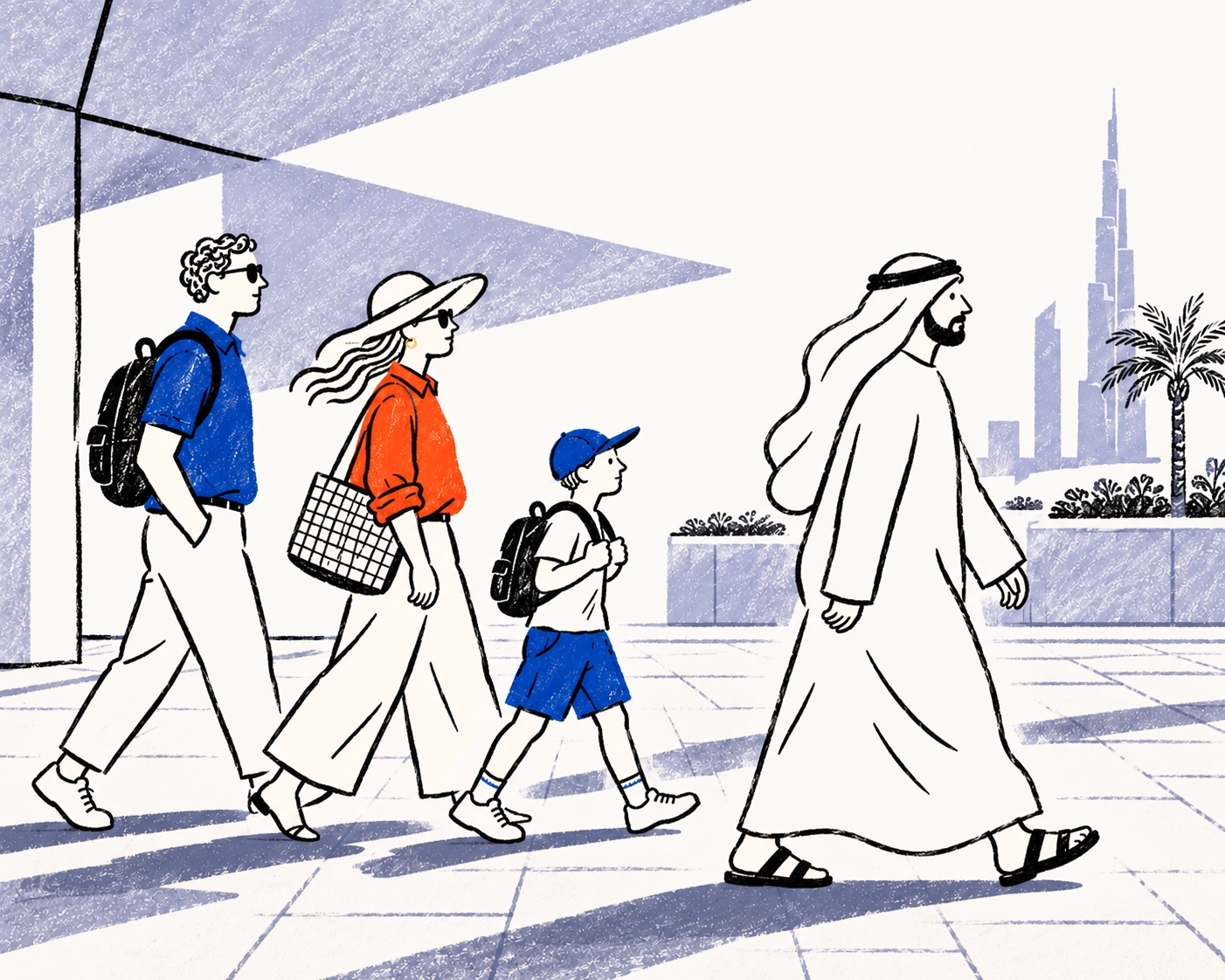
Dubai's audiences are diverse, and a temporary environment may welcome visitors with very different expectations, languages and levels of familiarity with a brand.
An experience shouldn't require someone to understand an elaborate concept before knowing where to go.
Clear wayfinding, accessible circulation, readable information and intuitive interactions are part of good spatial design. So are shade, seating and the ability to move through a space comfortably.
Outdoor activations have additional considerations. Heat, lighting, noise and the time people are likely to spend waiting can affect whether the experience feels inviting or exhausting.
These decisions influence the brand just as much as the graphic treatment.
An impressive installation with confusing signage is still confusing. An interactive screen that nobody understands how to use is still a poor interaction.
The details people encounter matter.
Temporary environments often rely heavily on branding.
Large logos, repeated colours, illuminated slogans and familiar campaign graphics can make a space instantly recognisable. They can also leave little room for the experience itself.
Some brands benefit from a quieter approach.
Materials, layout, furniture, lighting, sound and the way people move through a space can communicate character without repeating the logo on every surface.
A brand associated with craft might demonstrate how things are made. A business built around simplicity could create an environment that is unusually easy to navigate. A company that values experimentation might invite visitors to change or contribute to the installation.
The environment becomes a physical expression of the brand identity, rather than an empty setting covered in branded graphics.
This is particularly relevant in Dubai, where visual polish is rarely in short supply. A well-designed space needs to do more than look expensive.
Temporary experiences are often evaluated through attendance, media coverage and social engagement.
Those numbers can be useful, but they don't explain everything.
How many visitors tried the product? What questions did they ask? Did the experience change their understanding of the brand? Did they return through another channel? Did the business learn something that influenced its next decision?
For a new business, a pop-up might reveal which products attract attention and which messages need clarification.
For an established brand, it could provide an opportunity to test a new direction, engage a different audience or introduce a service in a less conventional setting.
Decide what the business wants to learn or achieve before designing the space. Otherwise, it's easy to mistake a busy installation for a successful one.
The same principle applies to any brand measurement: the useful metrics are those connected to the objective.
There's also the question of what gets left behind. Temporary installations can generate considerable material waste, particularly when everything is built around a short event.
Reusable components, adaptable structures and a realistic plan for dismantling and storage deserve consideration from the start.
A temporary experience doesn't have to mean temporary thinking.
Dubai will continue to create places, events and experiences that attract attention. The appetite for new concepts is one of the city's most recognisable characteristics.
For brands, temporary spaces offer the freedom to test ideas without turning every experiment into a permanent commitment.
They can be useful places to sell, demonstrate, listen and learn.
A photograph might bring someone to a pop-up. What happens after they arrive determines whether the journey was worthwhile.
What is experiential branding?
+Experiential branding uses interactions and environments to help people encounter a brand directly. This can include retail, events, pop-ups, installations and product demonstrations.
Why are pop-up spaces useful for brands in Dubai?
+They can help businesses reach new audiences, test products, create temporary retail experiences and gather feedback without immediately investing in a permanent location.
What makes a successful branded pop-up?
+A clear reason to visit, an experience relevant to the brand, intuitive spatial design and defined objectives. Attendance alone isn't enough to determine success.
How should brands measure a temporary activation?
+Measure according to its purpose. Relevant indicators might include qualified enquiries, product trials, purchases, feedback, subsequent visits or changes in brand perception.
Francisco Belo dos Santos shapes brands through strategy, identity and digital experiences. Based in Dubai and born in Lisbon, he brings an international perspective shaped by diverse cultures and markets, combining strategic thinking with a belief in purposeful design.

Clarify your challenge, set priorities and prepare a brief for your branding or design needs.
Strategy, identity and digital experiences come together in different ways. Here's a selection of projects shaped by different challenges, ambitions and opportunities.
Explore selected projects ↗Developing something new, rethinking an existing brand or considering a different direction? Tell me what you're working on and we'll take it from there.
Start a conversation ↗