Feel free to reach out:
hello@atomik.studio
November 5, 2026
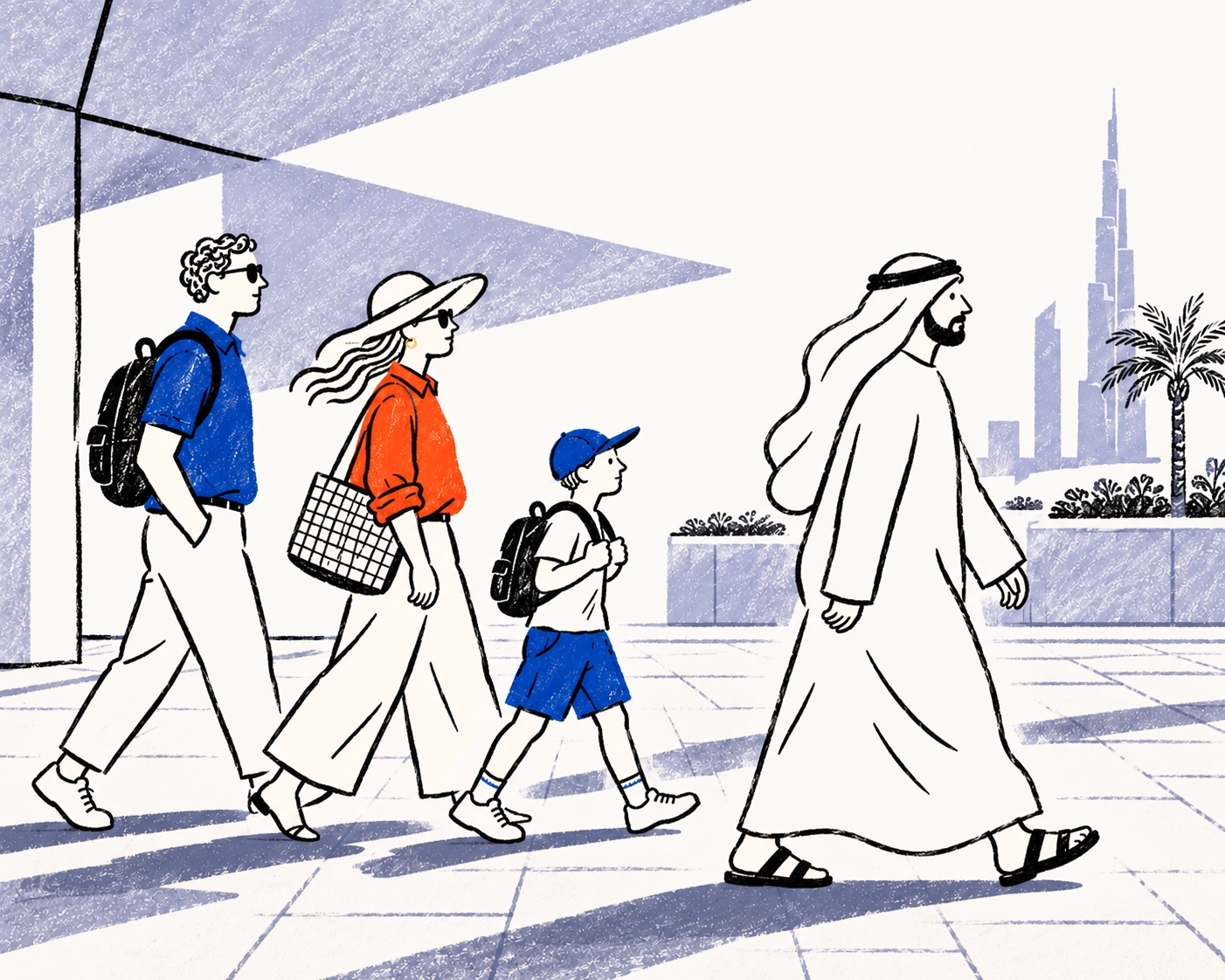
Dubai has ambitious plans to become more pedestrian-friendly. Making walking part of everyday life involves more than building footpaths.
Walking in Dubai can be a curious experience.
You might leave a building and find a beautifully maintained pavement, shaded landscaping and a crossing exactly where you need it. A few minutes later, the pavement ends, the nearest crossing is inconveniently far away and a destination that looked close on the map suddenly feels much less accessible.
The city has plenty of places where walking is enjoyable. But getting between those places isn't always easy.
In December 2024, Dubai approved the Dubai Walk Master Plan, outlining a network of more than 6,500 kilometres of walkways across 160 areas, with development extending beyond 2040.
The programme includes pedestrian bridges, improved connections to public transport, landscaping, shade, seating and public spaces.
It's an ambitious shift for a city where driving has shaped so much of everyday life.
And there's a lot that good design can contribute.
A café might be 400 metres away, but getting there could involve crossing a wide road, navigating a car park or walking beside traffic with little protection from the sun.
The same journey feels different when there is shade, a continuous pavement, safe crossings and a clear route.
Dubai's climate makes all of this harder. Walking isn't simply a matter of encouraging healthier habits. The environment needs to make it practical.
A shaded crossing may have more influence on someone's decision to walk than an attractive campaign encouraging them to do so.
If the walk is uncomfortable or unnecessarily complicated, people will probably choose another way to get there.
Good pedestrian environments require coordination between architecture, landscape, signage, lighting and transport infrastructure.
Often, it's the small, everyday details that make the difference.
Where can someone sit? Is there somewhere to find shade? Can they tell which direction to take without checking their phone? Does the route feel safe in the evening? Can someone using a wheelchair or pushing a stroller move through it without unnecessary obstacles?
The Dubai Walk plan includes wayfinding, ground markings, integrated pavements, public art and navigation systems alongside the physical infrastructure.
People need to get from one place to another, but they should also be able to enjoy getting there.
A lot of brand experience works in much the same way. People don't necessarily notice every individual decision that shapes an interaction. They remember whether it was straightforward, comfortable or unnecessarily difficult.
A city is considerably more complicated than a brand, but people bring their expectations and frustrations into both.
Walking changes how people experience a neighbourhood.
From a car, much of the city becomes a sequence of destinations. You leave one place, travel to another and spend relatively little time with what's in between.
On foot, the spaces between destinations become part of the experience.
You notice small businesses, shopfronts, materials, street signs, greenery and the way people use public space.
Deira offers a different walking experience from Downtown Dubai. Al Quoz has its own character, as do Jumeirah and Dubai Marina.
Those differences are worth keeping.
The Dubai Walk programme proposes area-specific designs, colours, landscaping and public art that respond to the character of different locations.
A pedestrian network doesn't need to look identical everywhere to work as a connected system.
People should be able to expect safe crossings, clear navigation and accessible routes without every neighbourhood ending up with the same visual identity.
In April 2026, Dubai's Roads and Transport Authority announced the award of the first phase of pedestrian development in historic Al Ras.
According to the RTA announcement, the project includes 12 kilometres of walkways and five kilometres of cycling tracks, connecting heritage landmarks and integrating with 11 public transport stations across Metro, bus and marine services.
The project considers how people move through the wider area, rather than treating each pavement as a separate piece of infrastructure.
It also introduces new pedestrian connections within an established historical neighbourhood.
Improving accessibility shouldn't mean losing the things that make a place recognisable.
In Al Ras, better connections could also make it easier for people to explore the area's existing streets, businesses and heritage.
More walkable neighbourhoods can change how businesses interact with people.
A shop designed primarily for customers arriving by car may need to think differently about its street-level presence when more visitors approach on foot.
Signage becomes important at different distances. Entrances need to be easy to identify. Window displays, outdoor seating and the relationship between private premises and public space begin to matter more.
A restaurant's experience might start before someone enters the building. So might a retail store's.
These details are easy to overlook in branding projects, where attention often goes to websites, campaigns and visual identities.
But the experience of a business isn't limited to what it controls directly.
Someone might discover a café while walking past, decide to enter because it looks welcoming, and return because the whole experience was easy.
In a city where convenience has become an expectation, businesses have good reason to think about how people reach them, recognise them and move through their spaces.
Clear entrances, useful information, welcoming ground-floor spaces and accessible routes can all make a difference.
And the neighbourhood benefits when businesses make the street a better place to spend time.
The Dubai Walk plan aims to increase the share of walking and other soft mobility trips to 25% by 2040.
That's a useful ambition, but kilometres of infrastructure alone won't tell us how well the programme is working.
Can people reach a Metro station comfortably? Visit nearby shops without driving? Move between neighbouring destinations without unnecessary detours?
Will they actually choose to walk?
Dubai has become internationally recognisable through its architecture, scale and ambition. Making the ordinary parts of city life work better deserves attention too.
A comfortable pavement probably won't appear in a tourism campaign. Neither will a well-placed crossing or a shaded place to sit.
People will use them, though.
And that's a fairly good measure of design doing its job.
What is the Dubai Walk Master Plan?
+The Dubai Walk Master Plan is a long-term programme to develop an interconnected pedestrian network across 160 areas of Dubai. It includes new and improved walkways, pedestrian crossings, public spaces and connections to transport infrastructure.
How many kilometres of walkways are planned?
+The programme announced in December 2024 outlines a network of more than 6,500 kilometres, including infrastructure planned beyond 2040. The RTA's April 2026 update describes more than 6,000 kilometres to be developed or enhanced by 2040.
When will Dubai Walk be completed?
+The programme is being developed in stages. The initial phase covers 2025–2027, with further implementation scheduled through 2040 and additional infrastructure planned beyond that.
How does walkability affect businesses?
+Walkable streets can create more opportunities for people to encounter businesses on foot. Clear entrances, accessible routes, signage, window displays and welcoming street-level spaces all influence how those businesses are experienced.
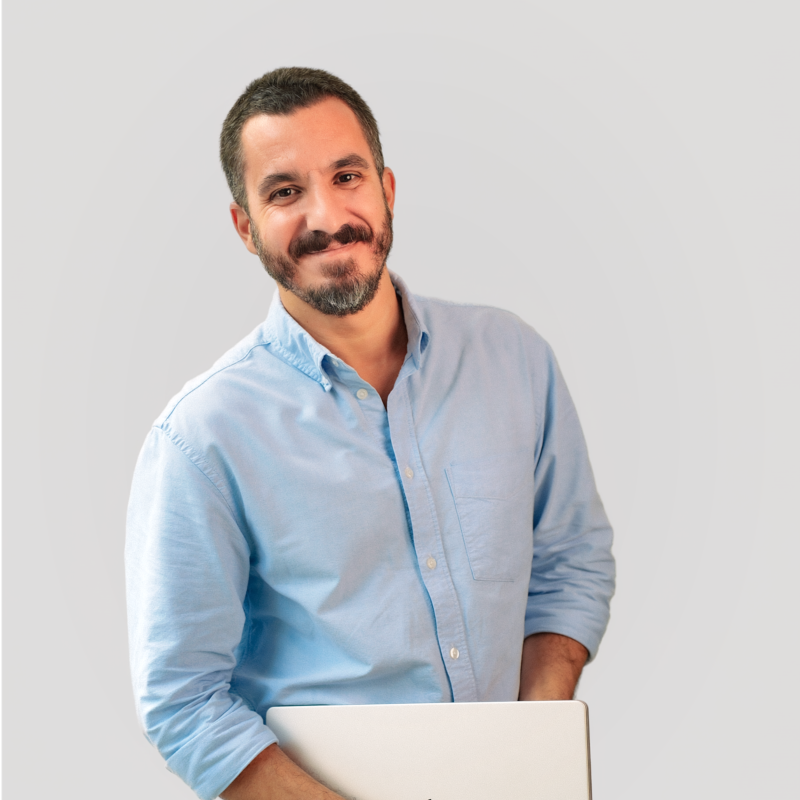
Francisco Belo dos Santos shapes brands through strategy, identity and digital experiences. Based in Dubai and born in Lisbon, he brings an international perspective shaped by diverse cultures and markets, combining strategic thinking with a belief in purposeful design.

Clarify your challenge, set priorities and prepare a brief for your branding or design needs.
Strategy, identity and digital experiences come together in different ways. Here's a selection of projects shaped by different challenges, ambitions and opportunities.
Explore selected projects ↗Developing something new, rethinking an existing brand or considering a different direction? Tell me what you're working on and we'll take it from there.
Start a conversation ↗