Menu


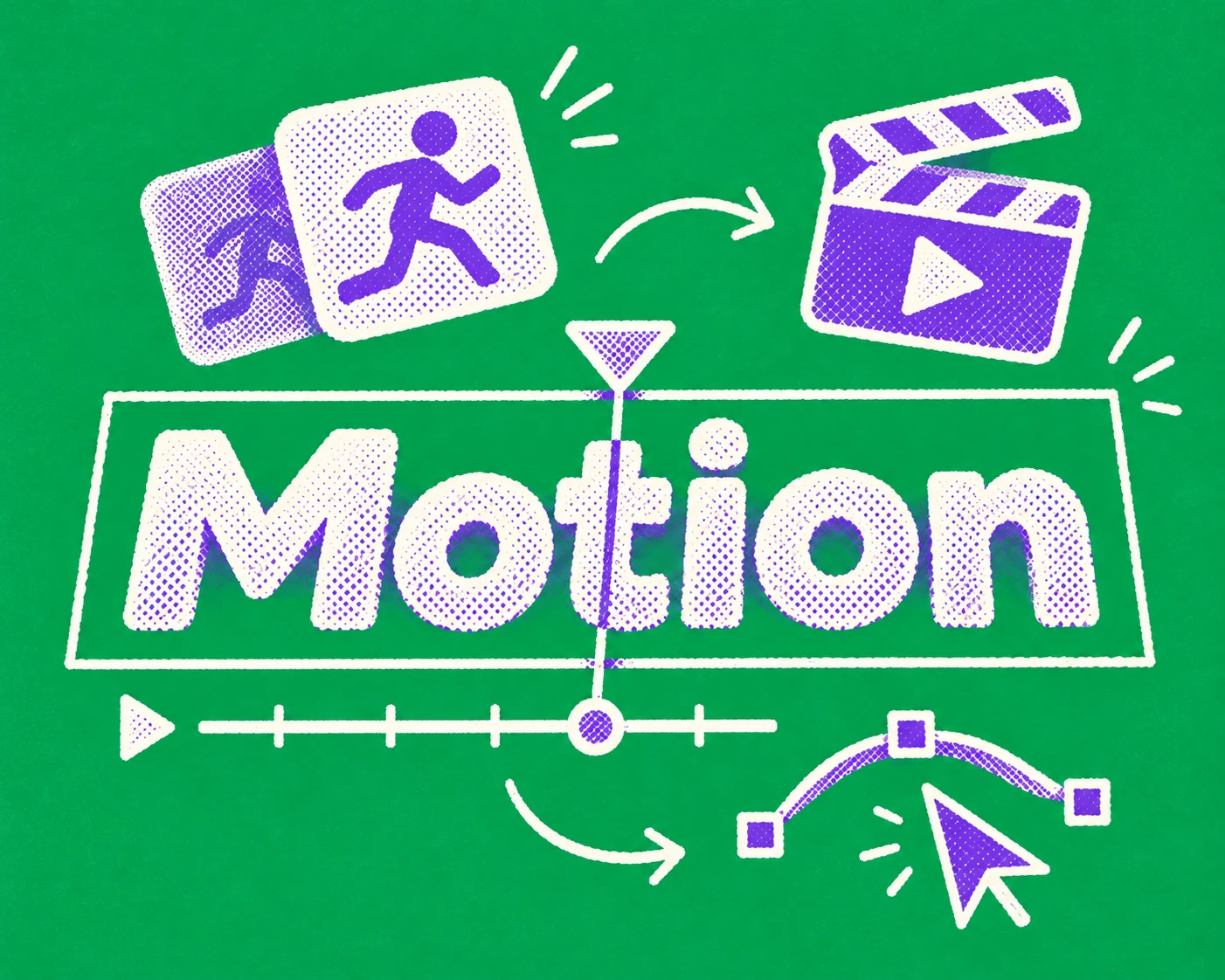
A brand’s character is expressed through movement as much as through its static visual elements. Motion identity defines how the brand moves, transitions and responds, making its behaviour a recognisable part of the wider identity.
Develop motion principles, animated brand elements, interaction behaviours and reusable assets that translate the brand’s strategy into movement. A coherent system helps animation support communication, accessibility and recognition across different contexts.
Motion identity services
Establish the behaviour behind the brand’s movement, from its timing and rhythm to the way individual elements respond. Translate those principles into practical assets and guidance that can be applied across channels.
Define the qualities that characterise the brand’s movement, including pace, rhythm, easing, direction and the relationship between elements. Establish principles that connect motion with the brand’s personality and help teams decide when movement is useful and when it is unnecessary.
Develop animated expressions of brand marks and identity elements that retain recognition while introducing movement. Explore how the mark enters, changes or resolves, and define appropriate versions, durations and usage contexts for different formats.
Extend the graphic language into a flexible system of moving elements, transitions and compositions. Define how shapes, typography, imagery and other assets interact over time so animated work feels connected to the identity rather than assembled from unrelated effects.
Define how the brand’s character appears in interface transitions, feedback, navigation and microinteractions. Connect movement with functionality and usability, including reduced-motion alternatives, so interactions communicate clearly without creating unnecessary distraction or friction.
Create reusable animated assets and templates for recurring content, presentations, social formats and digital applications. Establish practical instructions for editing, exporting and adapting them so teams can produce consistent motion work without starting from scratch.
Describe how you want your brand to move.
What is motion identity?
Motion identity is the system of principles and assets that defines how a brand moves. It includes timing, rhythm, transitions, animated brand elements and interaction behaviours, helping movement express a recognisable brand character across different touchpoints.
How is motion identity different from logo animation?
Logo animation is a moving expression of an individual brand mark. Motion identity defines the wider behaviour of the brand, including how graphics, typography, imagery and digital interfaces move and respond. Logo animation can be one application of that system.
Does every brand need a motion identity?
Not every brand needs an extensive motion system. The appropriate scope depends on where the brand appears, how often it uses moving content and which interactions matter to its audiences. Even a small set of motion principles can help teams make more consistent decisions.
How can brand motion support accessibility?
Motion should have a clear purpose, avoid interfering with reading or completing tasks, and offer appropriate reduced-motion alternatives where needed. Accessibility considerations should inform timing, scale, repetition and interaction behaviour throughout the design process.
What does a motion identity project deliver?
Depending on the scope, deliverables can include motion principles, animated logos, graphic behaviours, example applications, reusable templates, export-ready assets and usage guidance. The aim is to make the brand’s movement distinctive and practical to implement.
Strategy, identity and digital experiences come together in different ways. Here's a selection of projects shaped by different challenges, ambitions and opportunities.
Explore selected projects ↗Developing something new, rethinking an existing brand or considering a different direction? Tell me what you're working on and we'll take it from there.
Start a conversation ↗