Menu



Building a brand gives a business an opportunity that established organisations rarely have: the ability to make important decisions without having to work around years of accumulated habits, perceptions and design choices.
Yet many businesses spend this opportunity choosing a name, commissioning a logo and building a website before they have properly understood what they want to bring to the market.
Starting from scratch doesn't mean everything needs to be defined from day one. It means understanding which decisions need to be made now, which can evolve and which will become particularly expensive to reverse.
Before developing a brand, there needs to be something worth building a brand around. What is the business offering? Who is it particularly valuable to? Why would someone choose it over an established alternative? Can the business deliver what it intends to promise?
A business competing on convenience will need a different identity, communication style and customer experience from one competing on specialist expertise, even if both sell essentially the same thing. Branding cannot resolve a fundamentally weak proposition. It can, however, help a business recognise where its value lies, communicate it more effectively and develop it into something people understand and remember.
Looking at competitors is useful, but looking exclusively at businesses within the same category can give you a rather narrow understanding of the market. A new meal delivery service competes with other delivery services, but also with supermarkets, restaurants, cooking at home and the decision to skip lunch altogether.
Each represents a different alternative, with its own advantages, inconveniences and established behaviours. Understanding these alternatives reveals what the brand actually needs to overcome. Sometimes the obstacle is price. Sometimes it is trust, familiarity or the perceived effort involved in trying something new.
This is where brand positioning becomes particularly useful. It helps establish a meaningful place for the business within the choices people already make.
Brand strategy is often approached as an exercise in defining purpose, vision, mission and values. These can be useful, but they shouldn't become a collection of statements that have little bearing on the business.
For a new brand, I would give particular attention to five decisions:
The last point is particularly important. If the brand intends to be known for simplicity, the business needs to make things simpler. If it promises expertise, it needs to make that expertise visible and accessible. A strategy becomes useful when it starts influencing decisions beyond marketing.
I've covered the development of these foundations in more detail in the brand strategy guide.
Not every brand decision carries the same consequences. A campaign headline can be changed tomorrow. A name printed on thousands of products, registered across several markets and embedded in customer accounts is considerably more complicated to replace.
The same applies to brand architecture, packaging structures, digital infrastructure and certain aspects of an identity. Before committing to decisions with long-term implications, consider how the business might develop over the next few years. Will it introduce new products? Enter other markets? Serve different audiences? Operate through physical and digital channels?
You don't need to design for every imaginable future. You do need to avoid creating unnecessary limitations around the future you can reasonably anticipate.
For brand naming, this means considering pronunciation, meaning, trademark availability and suitability across relevant languages and markets. For digital platforms, it means understanding what the business will need to manage after launch.
The World Intellectual Property Organization's trademark resources are a useful starting point when considering the legal implications of a new brand name. Professional trademark clearance in the relevant jurisdictions remains a separate matter.
New businesses understandably want to make a strong first impression. But an identity also has to make the second, third and twentieth encounter feel connected to the first. This requires more than a well-designed logo.
Typography, colour, imagery, language, composition and other recurring elements can gradually become associated with the business. Their value develops through consistent exposure rather than through their appearance in a brand presentation.
The work of the Ehrenberg-Bass Institute on distinctive brand assets provides a useful perspective here: recognition is something businesses develop over time.
For a new brand, there is little benefit in introducing an unnecessarily complicated visual vocabulary. A smaller number of well-considered elements, used consistently across meaningful applications, can provide a much stronger starting point. The brand identity guide explores how these elements work together.
Rather than asking what deliverables a new brand should have, ask where people will first encounter it and what they will need at that moment.
For a consultancy, that might be a recommendation followed by a website visit and a proposal. For a consumer product, it might be packaging on a shelf. For a property developer, it could be a digital campaign followed by a sales conversation.
These encounters should inform the scope of the branding project. A beautifully designed merchandise collection has limited value if the business cannot clearly explain its offering on its homepage. An elaborate brand film may be premature if the sales team doesn't yet have the materials to communicate the proposition.
Invest first in the applications that help people discover, understand, trust and choose the business.
There is a tendency to treat launching a brand as the completion of an extensive design exercise. In reality, the launch is when many of the assumptions behind the work begin to meet actual customers.
A useful launch foundation might include a clear proposition, a recognisable identity, essential communications, a functioning website and the tools needed to deliver the intended customer experience.
What comes next should be informed by what the business learns. Are people understanding the offering? Are the right customers getting in touch? Which messages are being repeated back to the sales team? Are there recurring questions that the communications haven't addressed?
These observations are particularly valuable for a young brand. They provide an opportunity to improve without the organisational complexity that often accompanies change in a larger business. They also provide a useful basis for planning the next stages of the rollout.
Before introducing a new brand, consider whether the business can answer the following questions with reasonable confidence:
Not everything needs to be perfect. But uncertainty around these questions deserves more attention than another round of refinements to the logo.
Some of the most valuable characteristics of a brand will only emerge once the business starts operating, customers respond and the people behind it become more experienced. Leave enough room for that to happen.
What should I do first when building a brand?
+Clarify the offering, audience, alternatives and reason to choose the business before commissioning its name, identity or website.
Do I need a complete brand identity before launching?
+Not necessarily. Establish a coherent identity and the applications needed for the first customer journeys. Expand the system as the business learns what it needs.
Can I build a brand before I have customers?
+Yes, but treat early positioning and messaging as hypotheses. Test them with prospective customers and revise them as evidence emerges.
What should a new business prioritise in its branding budget?
+Prioritise decisions that are expensive to reverse and the touchpoints that directly influence discovery, understanding, trust and purchase.

Francisco Belo dos Santos shapes brands through strategy, identity and digital experiences. Based in Dubai and born in Lisbon, he brings an international perspective shaped by diverse cultures and markets, combining strategic thinking with a belief in purposeful design.

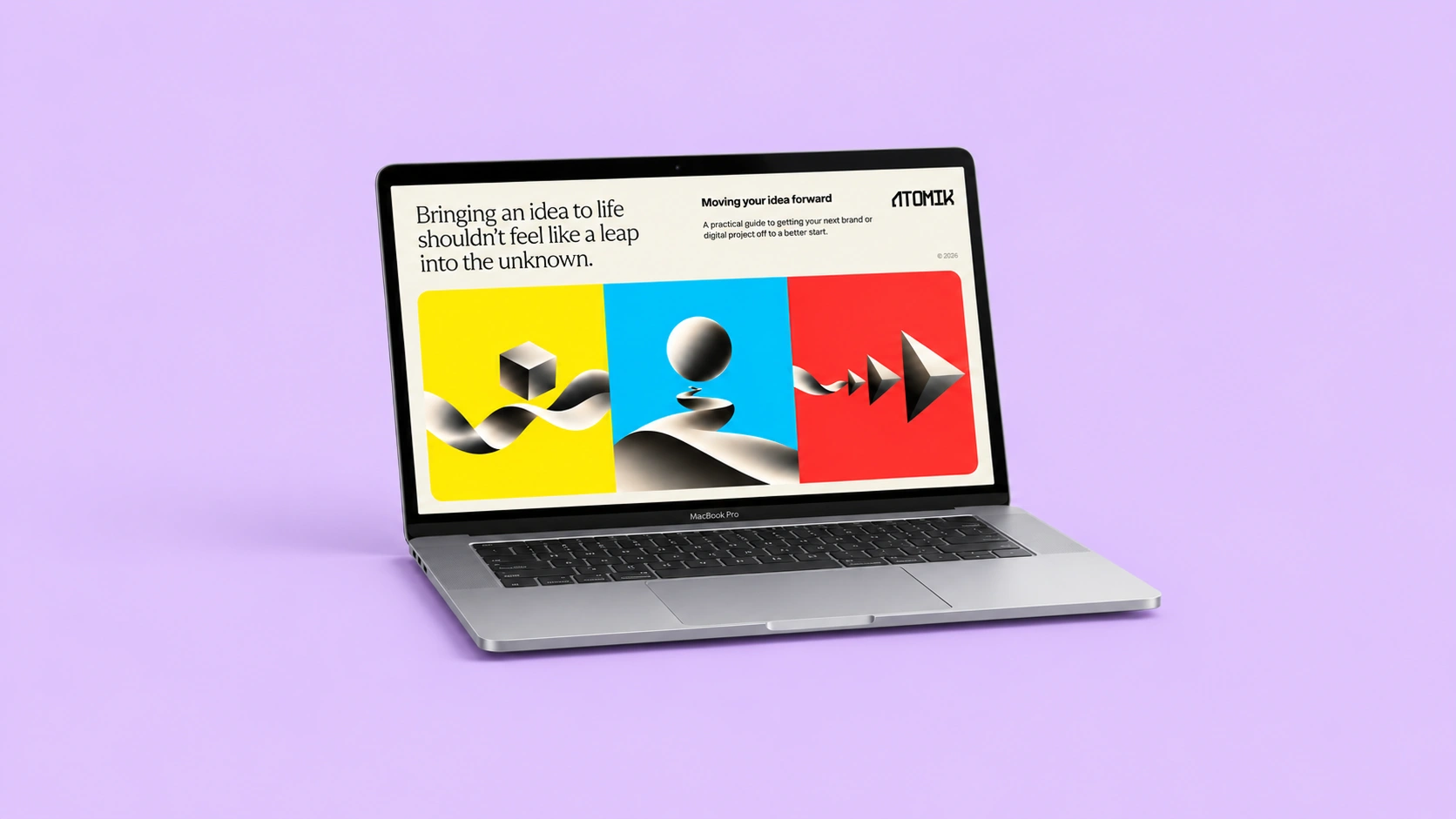
Clarify your challenge, set priorities and prepare a brief for your branding or design needs.
Strategy, identity and digital experiences come together in different ways. Here's a selection of projects shaped by different challenges, ambitions and opportunities.
Explore selected projects ↗Developing something new, rethinking an existing brand or considering a different direction? Tell me what you're working on and we'll take it from there.
Start a conversation ↗