Feel free to reach out:
hello@atomik.studio

October 21, 2026
A new identity might be part of the answer. The challenge is understanding what should change, what deserves to stay and how to make the new direction work.
A business rarely wakes up one morning needing a new logo. More often, something has changed and the brand hasn't quite kept up.
The company has grown into new services. Its customers have changed. Competitors are making more compelling promises. Or the business has become difficult to explain, even to the people working inside it.
A rebrand can help. It can also become a very expensive way of avoiding the decisions that caused the problem in the first place.
This guide looks at rebranding as a business decision, from understanding what has stopped working to building an identity and experience that can deliver on the new direction.
Rebranding is changing how a business is positioned, understood or expressed so its brand better reflects where it is and where it needs to go.
Sometimes this means rethinking positioning, messaging, identity and customer experience. Other times the strategy is sound, but the identity needs to become clearer, more flexible or more consistent.
A refresh and a deeper rebrand are not simply two price points for the same exercise. They solve different problems. The useful question isn't how dramatic the change should look. It's how much actually needs to change.
A familiar rebranding brief begins with a proposed solution: new name, new logo, new website, new everything.
Before committing, ask what would improve if those things changed. Is the business hard to recognise? Does it attract the wrong customers? Has the offering become confusing? Do teams tell different stories? Does the experience contradict the promise?
Weak recognition may call for more consistent distinctive assets. Confused positioning may require clearer strategy. A poor customer experience may need operational changes before any identity work.
A convincing solution is still the wrong one if it addresses only the symptom. Before investing in branding, it helps to understand what actually needs to change.
Write down what's not working, why you think that is and what evidence would change your mind. A few uncomfortable questions can save months of attractive but misplaced work.
Rebranding becomes more relevant when the business has genuinely moved. Perhaps it's entering another market, consolidating offers, reaching new customers or moving beyond a position that no longer fits.
Sometimes the competitive landscape changes while the business doesn't. But a competitor getting an attractive new identity isn't, by itself, a reason to start over. Neither is a founder getting bored with the current colours.
Look at the business model, audience, competition, perception and actual customer experience together. What has changed enough to justify a different promise? And what still makes the business worth choosing?
Before discussing what to remove, identify what should survive.
Recognition takes time to build. So does trust. A familiar name, colour, tone of voice or graphic device might carry associations that no new mood board can recreate overnight.
Ask customers what they recognise and value. Review the existing communications. Speak to the people who deal with complaints, sales objections and repeat customers.
Recognition can live across a system of distinctive elements beyond the logo. A rebrand should understand what people already associate with the business before deciding to replace it.
Not everything familiar is worth protecting. But familiarity shouldn't automatically count against something either. A good audit makes clear what has value, what creates confusion and what no longer reflects the business.
Who do we need to matter to? Why should someone choose us? What can we credibly promise? Which alternatives are they considering? What would we rather not become?
Answers should be specific enough to rule things out. If every creative direction still seems equally appropriate, the strategy probably hasn't made enough decisions.
Consider a business whose strength is making a complicated service easier to navigate. An identity designed around exclusivity might be visually impressive but work against the reason people choose it.
This is particularly relevant in Dubai, where familiar signals of sophistication can leave very different businesses looking interchangeable.
The point isn't to reject convention for the sake of it. It's to choose what helps people understand the business and what reveals its character.
A rebrand affects more than marketing. Sales, leadership, product, operations and customer service all have useful knowledge to contribute. They don't all need to approve every creative decision.
Their role is to reveal what customers struggle with, what the organisation can deliver, what creates internal confusion and what behaviours may need to change.
Be clear about who provides input, who decides and what criteria matter. Otherwise every review becomes another negotiation about taste.
Agreement matters, but consensus alone isn't a creative strategy. The team needs to agree on the problem and direction, rather than make concessions until the result is acceptable to everyone and memorable to no one.
Once the direction is clear, the creative work can begin: naming where necessary, visual and verbal identity, typography, colour, imagery, graphic language and messaging.
Test it where the business actually operates. A homepage with real copy. A small mobile screen. An ordinary sales document. A customer service message. Arabic and English applications if both are needed. A physical environment or product interface when relevant.
A handful of polished mock-ups can make almost any identity look convincing. Ordinary content, busy teams and imperfect conditions are a more useful test.
The goal is a coherent, recognisable system that people can use well, not simply a persuasive reveal.
A rebrand doesn't end when the logo is approved. That's often when the more complicated work starts.
List the places the brand appears: website, directories, social profiles, proposals, sales materials, email signatures, signage, packaging, product screens and internal documents.
Prioritise what needs to change before launch, what can follow and who owns each update. Put guidelines, templates and accessible assets in place so teams can use the identity independently.
If names or domains change, plan redirects, search visibility, metadata, account ownership and communication carefully. These are among the decisions worth addressing before building or rebuilding a website, rather than leaving them until launch.
An identity nobody knows how to implement isn't finished. It's just been presented.
A rebrand can change what people expect. The organisation needs to be ready for those expectations.
If the positioning promises simplicity, its processes and products should become easier to use. If it claims better support, customers should notice when they need help.
Otherwise the new messaging makes the gap between promise and reality more visible.
A strong identity cannot compensate for a business that fails to deliver. A rebrand can communicate progress, but it can't substitute for making it.
A successful launch can attract attention. Attention alone doesn't establish that the new direction works.
Define the intended outcomes before launch: clearer understanding, stronger consideration, more relevant enquiries, better conversion, easier adoption by teams or increased recognition.
Use customer conversations and qualitative feedback alongside the metrics that matter to the original business challenge. Some effects take time to emerge as customers encounter the new promise repeatedly.
Keep examining what people understand, how teams use the identity and whether the experience delivers what the business now claims.
Before committing, ask whether you can explain the problem; identify what existing assets people value; distinguish brand issues from product or operational ones; agree on a position and audience; assign decision-makers; test the identity with realistic content; resource implementation; and define how success will be evaluated.
You don't need perfect answers to begin. But the gaps should be visible rather than discovered halfway through an expensive project.
Rebranding is an opportunity to reconsider the relationship between what a business has become, what people believe about it and where it wants to go next.
Sometimes it calls for a visible break with the past. Sometimes it means keeping far more than expected, with a better system around what already works.
The interesting part isn't how much changes. It's whether those changes make the business clearer, more relevant and more capable of delivering its promise.
Change what needs changing. Keep what still works. Give the rest a reason.

Francisco Belo dos Santos shapes brands through strategy, identity and digital experiences. Based in Dubai and born in Lisbon, he brings an international perspective shaped by diverse cultures and markets, combining strategic thinking with a belief in purposeful design.

Francisco Belo dos Santos shapes brands through strategy, identity and digital experiences. Based in Dubai and born in Lisbon, he brings an international perspective shaped by diverse cultures and markets, combining strategic thinking with a belief in purposeful design.
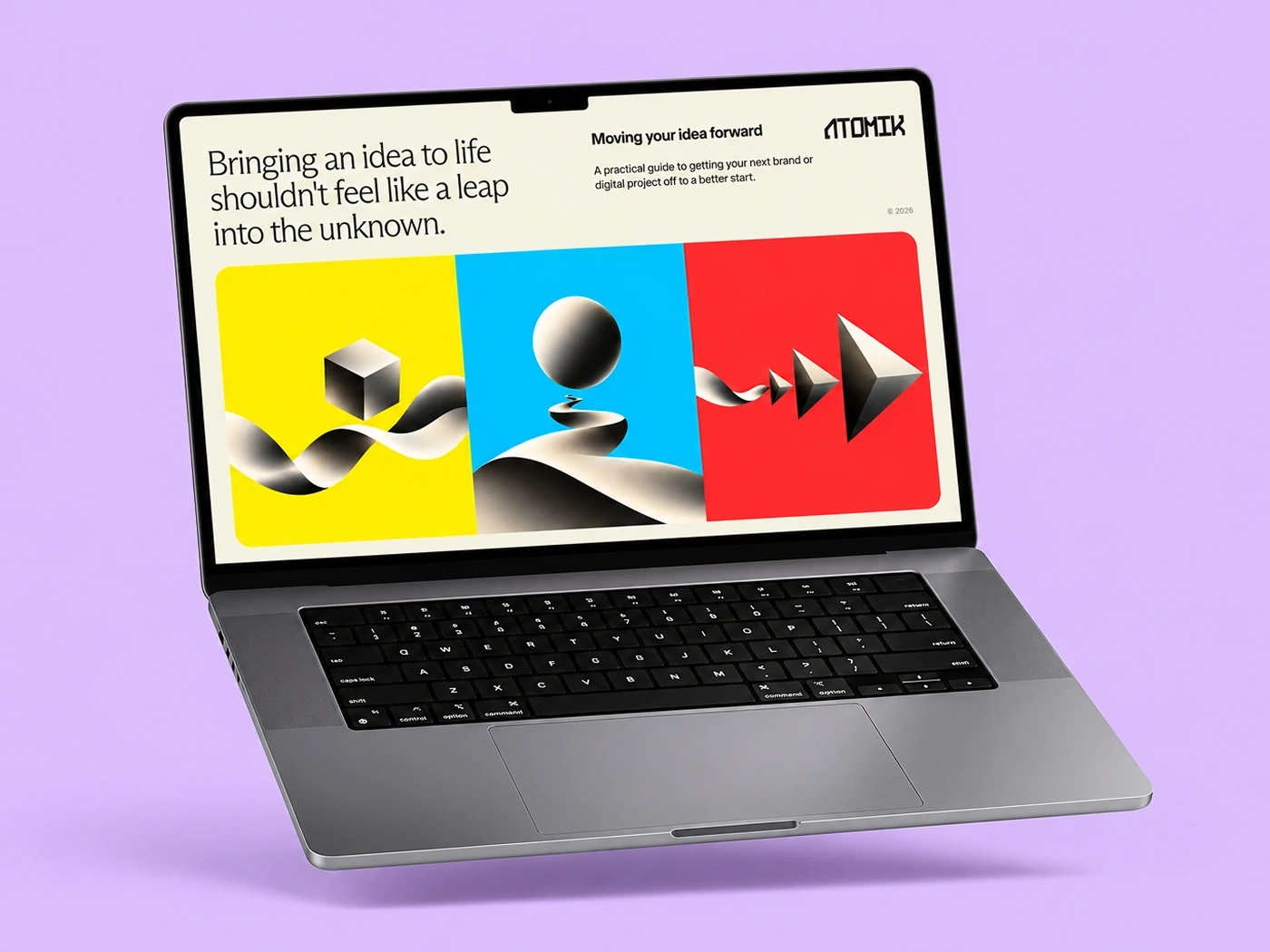
Enjoy a free, practical guide to help you define your challenge and prepare for your next branding or design project, complete with useful checklists.