Feel free to reach out:
hello@atomik.studio
November 1, 2026
For a brand operating in Arabic and English, approval should depend on how convincingly both languages work.
The English identity has been approved. The typeface feels right, the layouts look convincing and everyone is ready to move on.
Then the Arabic arrives.
The wordmark needs more room. The headline changes the balance of the layout. The type pairing feels like it belongs to a different business. Suddenly, decisions that were considered finished are back on the table.
For a business operating in both languages in Dubai, discovering this after approval can mean revisiting decisions the team thought were settled.
A brief can say “bilingual identity” while the review process gives nearly all its attention to English. Arabic appears in a supporting slide, or as a wordmark shown without the applications needed to judge it.
That leaves a gap between the scope of the project and the evidence used to approve it.
Before calling the identity resolved, I’d want to see it working convincingly in both languages. That requires representative content, people qualified to review each language and enough time to act on what they find.
Knowing what to adapt and what should remain recognisable provides the wider principle. The approval process needs to turn it into something the team can judge.
Consider a hypothetical Dubai hospitality brand. Its English expression is relaxed and contemporary. The Arabic wordmark has been selected mainly because it sits neatly beside the Latin one.
In isolation, the lockup looks balanced. Across a booking page, a menu and a confirmation message, the Arabic feels more formal than the English. The geometry is coordinated; the character is less convincing.
The review needs to examine the personality carried by each script and the language around it. Matching apparent weight or fitting both names inside the same rectangle won’t answer that question.
Typography and copy need to be considered together. The same applies to a voice that remains coherent across everyday communications. A literal translation can preserve the words while changing how the business comes across.
A large wordmark on an empty background leaves many practical questions unanswered.
I’d test the more demanding applications before approval: a narrow mobile header, a long offer name, a bilingual address, a price beside mixed-script information and a service message with a clear next step.
Use realistic content so the review reveals the problems the team will actually face.
For digital applications, layout and text direction also need proper implementation. The W3C’s guidance on right-to-left text explains why base direction belongs in the markup. A mirrored mockup still needs to be tested as a working experience.
These tests give the team evidence while changes are still manageable. If a problem appears repeatedly, reconsider the underlying system rather than approving a separate workaround for every application.
Visual judgement, language accuracy and tone are related responsibilities. One person may cover more than one, but the project needs to establish who is qualified to make each call.
Who judges the Arabic typography? Who reviews meaning and register? Who resolves a conflict between the two? And who signs off the combined experience?
Effective localization depends on local knowledge, informed review and clear decisions about what can change. That means involving the right expertise while the identity is being shaped and carrying those decisions into usable guidance.
The final handover should include approved language relationships, realistic examples, recurring terms and a process for reviewing new applications. Otherwise, the same unresolved questions simply move to the next team.
If Arabic is part of the identity, it should be part of the evidence used to approve it.
When should Arabic be introduced in a branding project?
+Arabic should be part of the brief and early design development whenever the identity needs to work in both languages. Reviewing it alongside English gives the team time to resolve typography, naming, tone and layout before approval.
Do Arabic and English typefaces need to look identical?
+No. Both should support the intended character of the brand, but each script needs to work naturally. Similar construction or identical point sizes won’t necessarily create a balanced relationship. Judge the pairing in realistic applications.
What should be tested before approving a bilingual identity?
+Test both languages across the same representative applications, including mobile headers, long names, addresses, prices and service messages. Review legibility, hierarchy, tone and reading direction with people qualified to assess each language.
Who should review the Arabic identity and copy?
+Involve designers who understand Arabic typography and fluent Arabic writers or language specialists who can assess meaning and tone. Agree who approves each area and who resolves conflicts before the final review.

Francisco Belo dos Santos shapes brands through strategy, identity and digital experiences. Based in Dubai and born in Lisbon, he brings an international perspective shaped by diverse cultures and markets, combining strategic thinking with a belief in purposeful design.

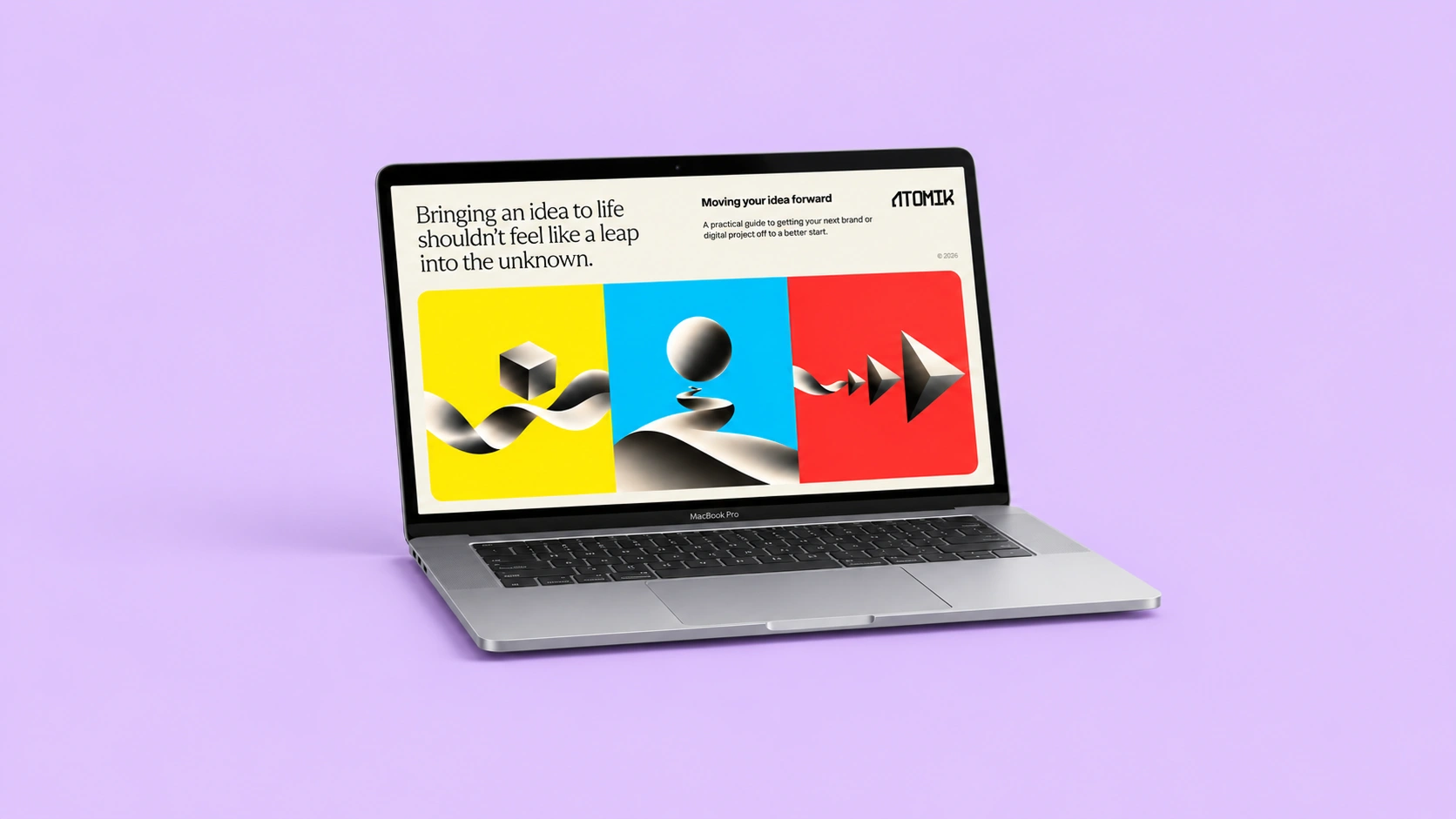
Clarify your challenge, set priorities and prepare a brief for your branding or design needs.
Strategy, identity and digital experiences come together in different ways. Here's a selection of projects shaped by different challenges, ambitions and opportunities.
Explore selected projects ↗Developing something new, rethinking an existing brand or considering a different direction? Tell me what you're working on and we'll take it from there.
Start a conversation ↗